

Beyond the Crate: What's Next for Traveling Exhibitions
Where do traveling exhibitions go next? At ASTC 2026, Flying Fish is gathering some of the brightest minds in the field to chart the course together.
For decades, traveling exhibitions have done something remarkable: they’ve carried stories, objects, and ideas far beyond their original walls, opening doors for museums and science centers to ignite curiosity, reach new audiences, and create experiences that might otherwise be out of reach.
But the world around those exhibitions is changing. Budgets are tighter. Freight and fabrication costs have climbed. Visitor expectations keep evolving. Institutions are thinking more carefully about the resources they use, the values they represent, and how every investment supports their mission.
The traveling exhibition world is evolving right alongside.
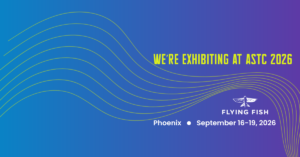
On Friday, September 18, join us in Phoenix for Beyond the Crate: The Future of Traveling Exhibitions—a candid, forward-thinking conversation about the choices we make today and how they shape tomorrow’s experiences. The future isn’t just about what we pack inside the crate. Maybe it’s time to reimagine the crate itself.
An Evolving Industry Calls for New Thinking
This year’s ASTC theme is Forward. For those of us in the traveling exhibition community, that couldn’t be more fitting.
The traditional touring model has delivered tremendous value to institutions and audiences around the world. But the pressures surrounding that model, from rising material and transportation costs to shifting institutional priorities, are pushing producers and venues alike to take a fresh look at how exhibitions are dreamed up, built, moved, maintained, and eventually retired.
For Jay Brown, Principal & Managing Director of Flying Fish, planning for what’s ahead has become increasingly urgent:
“The museum and science center community has been subject to brute-force change over the past two years. Now more than ever, we need to be planning for the future.”
Jay brings more than 15 years of experience approaching the exhibition industry from what he describes as a slightly different perspective: working as a colleague to museums and cultural institutions while also bringing a commercial lens to exhibition partnerships. That combination means thinking simultaneously about visitor experience and learning outcomes, durability and longevity, institutional priorities and financial realities. Increasingly, those things can’t be considered separately.
The question isn’t simply how we keep creating extraordinary experiences. It’s how we build models that let institutions keep creating them.
From Best Practices to Next Practices
There’s no single answer, and Beyond the Crate isn’t trying to provide one. Instead, the session will explore the decisions made throughout an exhibition’s lifecycle, from early concept development and material selection to fabrication, transportation, refurbishment, reuse, and end-of-life planning, and ask where there’s room to do things differently.
For Joseph Imholte, Licensing & Partnerships at Flying Fish, that means moving the conversation past what the field already recognizes as good practice:
“It’s time we moved past best practices and into next practices, and set examples for others to follow.”
Joseph’s perspective has been shaped by working alongside exhibition designers, developers, and fabricators, and by listening to ideas many of those professionals have advocated for over decades. That kind of institutional wisdom matters. So does the courage to experiment with what’s next.
Not every institution can rebuild its exhibition model overnight. Not every promising idea will work. Not every choice will fit every budget. Progress doesn’t require pretending otherwise. Joseph hopes attendees leave recognizing that experiments, both big and small, can make a difference, and that sharing what we’ve learned can help move the entire field forward. Or, as he puts it, we shouldn’t “let perfect be the enemy of good.”
Try something. Learn from it. Share it. Then try again.
Designing Beyond Opening Day
Exhibition development naturally builds toward an opening. Years of ideas, research, design, fabrication, testing, logistics, and installation finally become an experience visitors can step into. But what happens if we start designing not only for opening day, but for year five? Or year seven?
Longevity is at the heart of Beyond the Crate. The panel will dig into how modularity, refurbishment, content renewal, smart material choices, and long-term planning can keep exhibitions fresh and engaging—while making the most of every resource already invested.
That shifts the questions we ask. Can we repair instead of replace? Can content evolve? Can an exhibition flex for different venues and audiences? Can we design with transportation in mind from the start? And should success be measured by the number of venues—or by how long an exhibition stays relevant and sparks meaningful experiences?
These questions aren’t just environmental. They’re operational, financial, and more connected than ever.
Making Space for Analog in an Increasingly Digital World
Moving forward doesn’t necessarily mean adding another screen. Kelly Fernandi, President and Creative Director of Minotaur Mazes, brings more than 30 years of exhibition development experience to the panel, along with a perspective shaped outside his professional life:
“Through my 30+ years of both exhibition development and parenting, I have become a fervent advocate for analog interactivity and learning as a needed counterpoint to the accelerating use of tech-based experiences.”
It’s an important reminder in a conversation about innovation. New doesn’t automatically mean digital, and technology isn’t the only way to create relevance, interaction, or memorable learning. As institutions evaluate new tools and changing audience expectations, Beyond the Crate will also make room for questions about what’s worth preserving, what needs a second look, and what visitors actually need from the experiences we build.
Kelly sees that kind of recalibration as essential:
“The world is changing so quickly. Even those of us with decades of perspective need to reevaluate and recalibrate what it takes for the science center and TREX communities to be successful.”
That willingness to reconsider long-held assumptions may be one of the industry’s most important tools.
What If the Future Is More Collaborative?
It’s also worth questioning whether traveling exhibitions really have to work the way they always have.
What if venues coordinated schedules and freight? What if institutions collaborated more closely during exhibition development? What if expertise, infrastructure, content, and resources could be shared more effectively? What if the future of traveling exhibitions is less about ownership and more about partnership?
Those are among the possibilities Beyond the Crate will put on the table. The session will explore venue coalitions, collaborative development, cooperative touring strategies, and other models that could help institutions reach more audiences while creating greater value from investments already being made across the field. The goal isn’t a theoretical vision of a perfect industry. It’s finding the ideas that can actually work.
Meet the Voices Beyond the Crate
Moderated by Anna Clark, Director of Sales & Marketing at Flying Fish, Beyond the Crate brings together four panelists representing different corners of the traveling exhibition ecosystem:
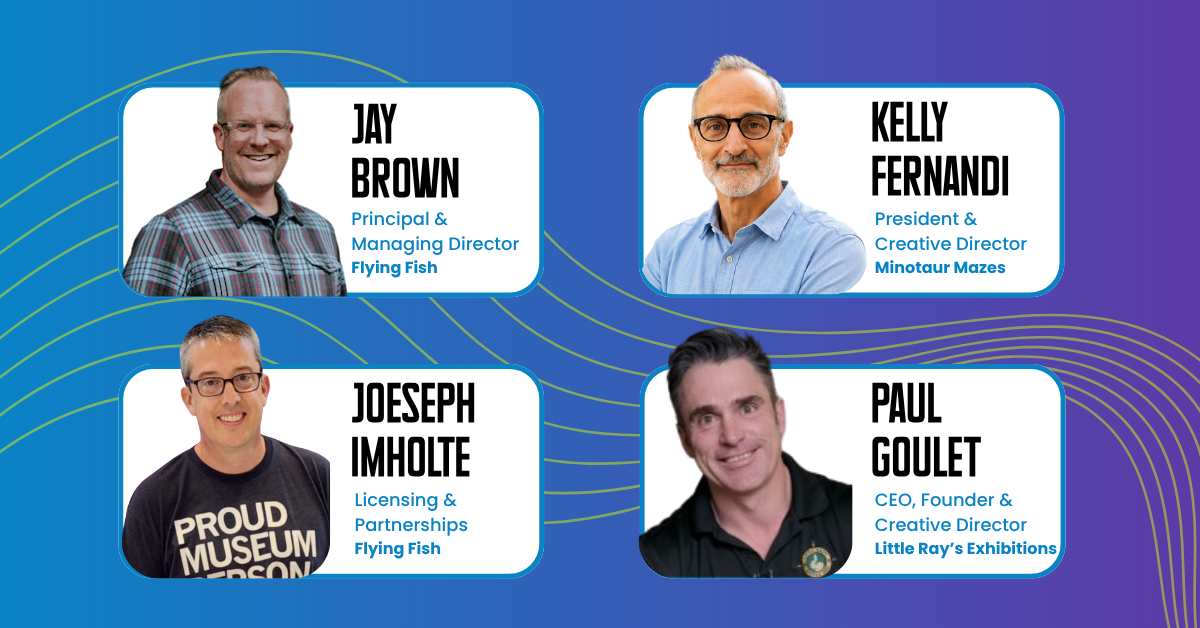
- Jay Brown, Principal & Managing Director, Flying Fish
- Joseph Imholte, Licensing & Partnerships, Flying Fish
- Paul Goulet, CEO, Founder & Creative Director, Little Ray’s Exhibitions
- Kelly Fernandi, President & Creative Director, Minotaur Mazes
That range of perspectives is intentional. Producers. Creatives. Exhibition developers. Institutional leaders. People who build exhibitions, host them, move them, operate them, and rethink them, and who have experienced firsthand how dramatically the landscape has changed. The panel won’t be looking for agreement on every issue. It will be looking for useful ideas.
Beyond the Buzzwords
There’s one word you may hear less than expected during this conversation: sustainability. That’s deliberate. It’s become one of those words broad enough to mean almost anything, which makes it easy to say and hard to act on. Beyond the Crate is built around a more useful question: what can we actually do?
Can smarter material choices extend an exhibition’s useful life? Can thoughtful design reduce freight requirements? Can refurbishment stretch the value of what’s already been built? Can institutions share resources more effectively? Can we measure success in new ways? Can small, practical changes—multiplied across an industry—add up to something big?
These are complicated questions. Some involve trade-offs. Some require experimentation. And a smart choice for one institution may not be the right one for another. That’s exactly why we need to talk about them, specifically and honestly, instead of settling for a word that sounds good on a panel description.
What Happens After ASTC?
The most important question isn’t what happens during the panel. It’s what happens afterward.
Kelly hopes attendees leave with new ideas and resources they can apply to their own institutions. Joseph hopes people leave willing to experiment and willing to share those experiments with the rest of the field when they work. And Jay hopes institutions recognize that the coming years will bring both significant roadblocks and immense opportunities, requiring a more forward-thinking approach to visitor experience, environmental considerations, economic and political change, and financial independence.
Different perspectives. Different priorities. But one idea remains: the future of traveling exhibitions will be shaped by what we choose to do next.
Join the Conversation at ASTC 2026
We don’t expect to solve the future of traveling exhibitions in one session. But we can ask sharper questions, challenge a few assumptions, and share what’s working—and what isn’t. Maybe we’ll leave Phoenix with one idea worth trying back home.
Join Flying Fish and colleagues from across the field for:
Beyond the Crate: The Future of Traveling Exhibitions
Friday, September 18, 2026
1:30 – 2:30 PM MST
Location: North 226 AB
ASTC 2026 | Phoenix, Arizona
Come ready to think beyond the crate—and help us move the conversation forward.